Ewe flushing: plan feeding before and during mating
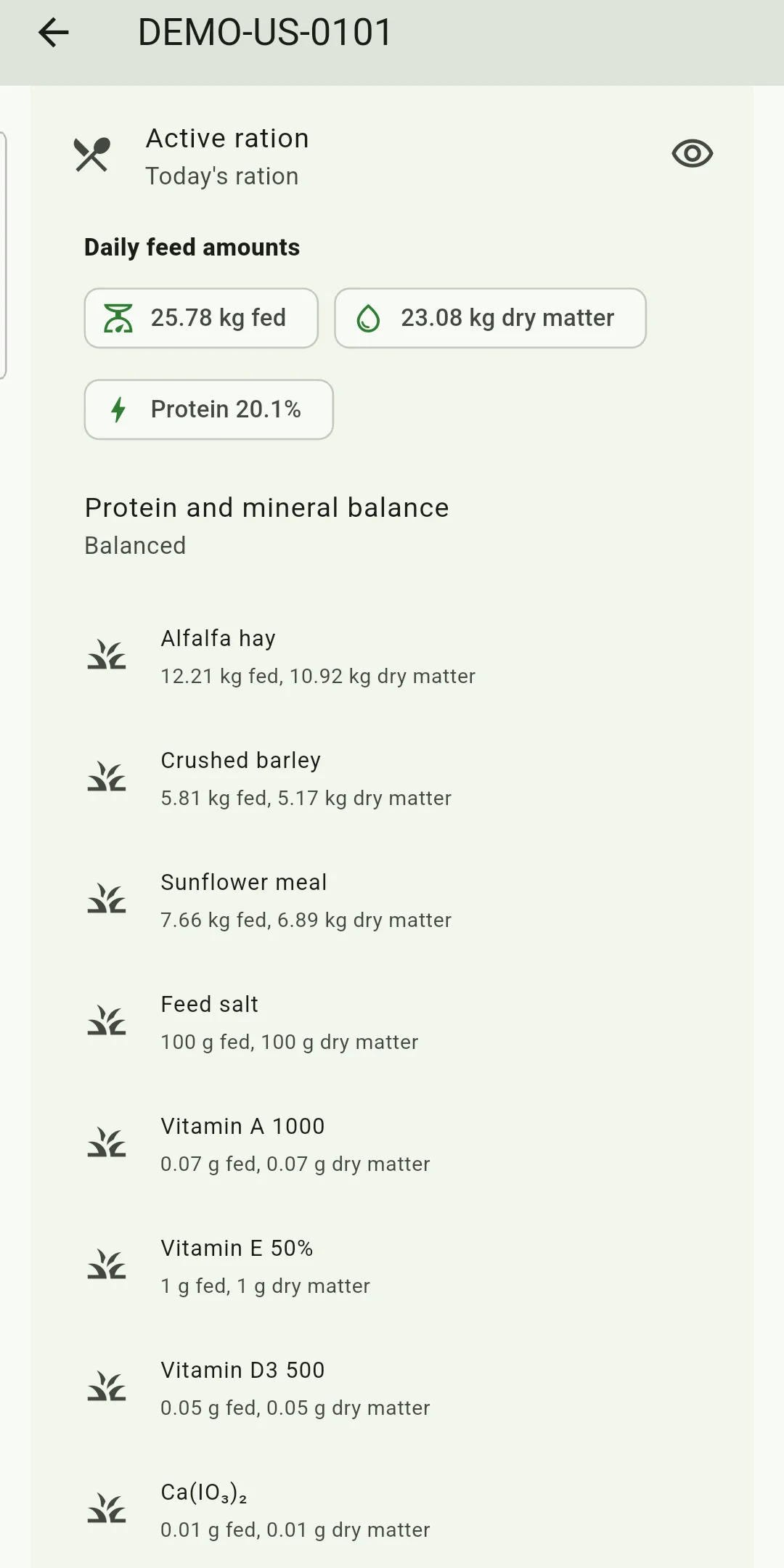
Ewe flushing means increasing energy and protein from 2 weeks before the rams go in through the first 3 weeks of breeding. NRC 1985 guidance puts a 60 kg ewe's daily dry matter intake at 1.09 kg for maintenance and 1.68 kg for flushing. HerdMobile calculates daily amounts using your own feeds.
Compiled from open-access scientific sources.
Reference values and basis
| Parameter and basis | Value |
|---|---|
| 50 kg ewe, maintenance | 1.00 kg dry matter, 0.54 kg TDN, 95 g CP, 2.0 g Ca, 1.8 g P per day |
| 50 kg ewe, flushing | 1.59 kg dry matter, 0.95 kg TDN, 150 g CP, 5.3 g Ca, 2.6 g P per day |
| 70 kg ewe, maintenance | 1.18 kg dry matter, 0.68 kg TDN, 113 g CP, 2.5 g Ca, 2.4 g P per day |
| 70 kg ewe, flushing | 1.81 kg dry matter, 1.04 kg TDN, 163 g CP, 5.7 g Ca, 3.2 g P per day |
| 90 kg ewe, maintenance | 1.41 kg dry matter, 0.77 kg TDN, 132 g CP, 2.9 g Ca, 3.1 g P per day |
| 90 kg ewe during flushing | 2.00 kg dry matter, 1.18 kg TDN, 177 g CP, 6.1 g Ca, 3.9 g P per day |
When should you start flushing ewes?
Start flushing 2 weeks before the rams go in and continue through the first 3 weeks of breeding: five weeks in total. Begin the richer ration two weeks before mating, keep it going for the first three weeks, then return to maintenance or early-pregnancy feeding. Note the ram introduction date in HerdMobile and count back to work out when feeding should change. Ewes in fair body condition benefit most; very fat ewes gain little from extra feed. Knowing the dates gives you time to organise feed before mating begins.
How much extra feed do flushing ewes need?
During flushing, dry matter intake rises by roughly 0.6 kg per day, with a target gain of 0.22 lb, about 100 g, per day at every body weight. Total digestible nutrients (TDN), a measure of feed energy, rise by about 0.4 kg daily, and crude protein (CP) by 45 to 55 g, depending on ewe size. A 50 kg ewe's calcium needs rise from 2.0 to 5.3 g per day. HerdMobile calculates daily feed amounts from your hay, pasture or silage and concentrate, so you can plan the ration using what you have.
How do you manage flushing on farm?
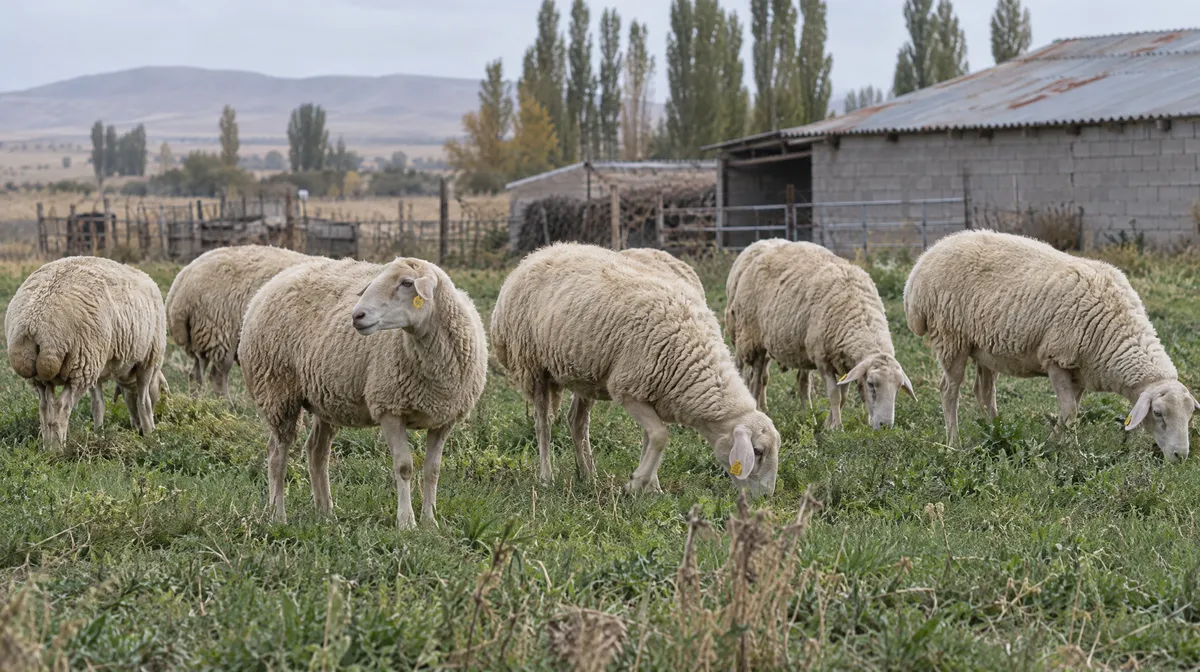
Group ewes by body condition: thin ewes can stay on flushing feed while fat ewes remain on maintenance. Change the amount gradually over about a week to let the rumen adjust, and allow enough trough space for every ewe to eat at once. Good pasture can supply part of the extra feed needed. Include its dry matter when calculating the ration in HerdMobile, so you can work out how much concentrate is needed. Use minerals labelled for sheep and check copper at 7 to 15 mg per kilogram of dry matter. Note when the ration changes and check body weight at the end of flushing.
Questions from the farm
How long does flushing last?
Flushing lasts five weeks: the 2 weeks before breeding and the first 3 weeks of breeding. After that, move the ewe back to a maintenance ration or one suited to early pregnancy.
How much weight should ewes gain during flushing?
The daily gain target during flushing is 0.22 lb, or about 100 g, for ewes of all sizes. For maintenance, the daily gain target is just 0.02 lb.
Does a fat ewe need flushing?
Fat ewes can stay on a maintenance ration. Ewes in fair body condition respond best to flushing; group thin ewes separately for extra feeding.
Can good pasture replace concentrate feed?
Good pasture can supply some of the extra feed needed for flushing. Include its dry matter when calculating a ration in HerdMobile, so you allow for what the ewes already eat.
How HerdMobile helps
Bring your animals, feed stocks and farm accounts together on your Android phone. HerdMobile keeps your daily work moving offline: record events, compare feed quantities and follow sales and payments in one place. Use your own feeds and herd information to prepare a ration, then keep a backup file under your control.
HerdMobile calculates daily amounts of hay, pasture and concentrate from your ewes' average weight and the feeds you have. Check calcium and phosphorus across the whole ration, with copper at 7 to 15 mg per kilogram of dry matter, and note the date whenever you change the feed.