Calf starter and weaning: balance milk and solid feed
Calf weaning starts with knowing how much dry matter comes from milk and how much comes from starter. NASEM 2021 gives dry matter, energy and protein needs for Holstein and Jersey replacement calves at different milk shares. Use the feeding plan to follow costs with HerdMobile as starter intake grows.
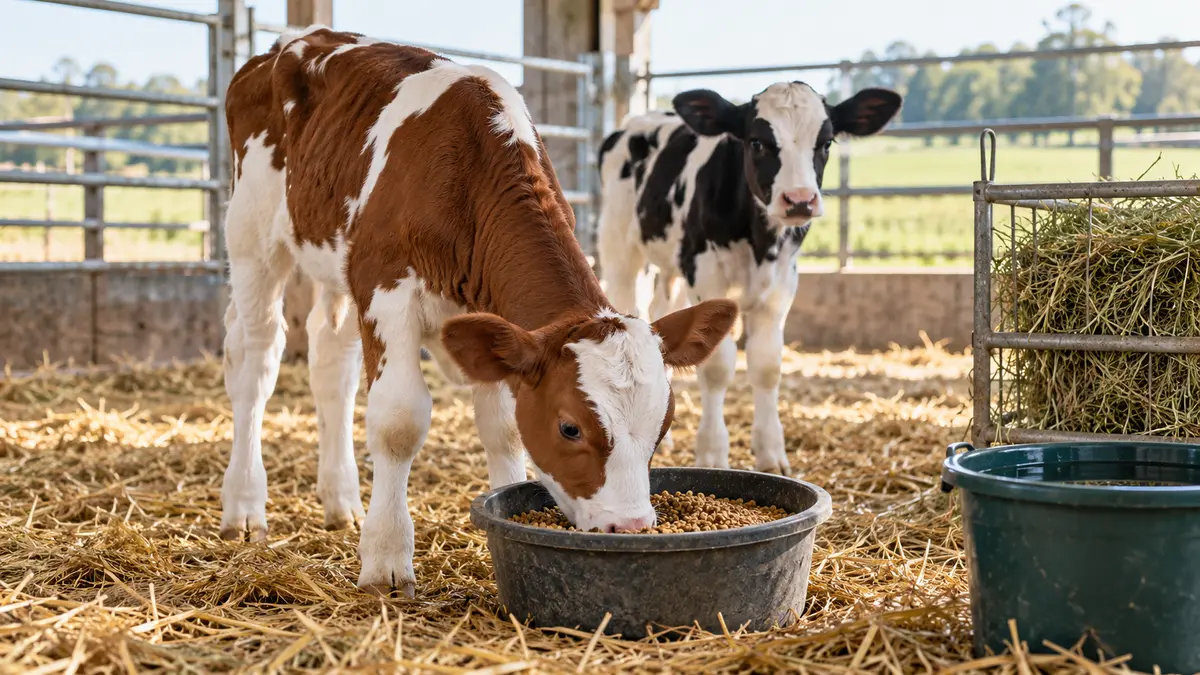
Compiled from open-access scientific sources.
Why does the milk share matter during weaning?
As starter replaces milk replacer, calves need more total dry matter to maintain the same daily gain because starter supplies less energy per kilogram of dry matter. For example, under NASEM 2021 guidance, a 50 kg Holstein-type calf gaining 0.6 kg a day needs 0.97 kg of dry matter and 217 g of crude protein when liquid feed supplies 80% of dry matter. At a 40% liquid share, the needs rise to 1.16 kg of dry matter and 250 g of crude protein. Plan feeding around these shares, near 80% and near 40%, using the calf’s actual milk and starter intake.
How do you track calf starter intake?
Weigh the starter offered and the leftovers each day; the difference is what the calf ate. Note this alongside dry matter from milk, and use HerdMobile to track feed consumption. Keep starter fresh and dry, with clean water available from the first days: drinking water helps calves eat starter. Divide dry matter from milk by total dry matter to find the liquid share. For example, a 30 kg Jersey calf gaining 0.4 kg a day needs 0.58 kg of dry matter at an 80% liquid share and 0.72 kg at 40%.
How do you reduce milk before weaning?
Reduce milk gradually as starter intake rises, and weigh calves weekly to check that daily gain holds. For example, a 60 kg Holstein-type calf gaining 0.8 kg a day needs 1.25 kg of dry matter at an 80% liquid share and 1.50 kg at 40%. Starter intake must therefore increase as milk decreases. Date each feeding change, compare groups and use your starter price to calculate cost per calf per day. Gradual changes give the rumen time to develop.
Questions from the farm
What does the milk share mean during weaning?
The milk share is the proportion of total dry matter supplied by milk or milk replacer. The weaning guidance covers shares near 80% and near 40%.
Why does total dry matter rise as starter replaces milk?
Starter supplies less energy per kilogram of dry matter than milk replacer. Calves therefore need more total dry matter to maintain the same daily gain.
How should I measure starter intake?
Weigh the starter offered and the leftovers daily. Note the difference alongside dry matter from milk, and track feed consumption with HerdMobile.
How HerdMobile helps
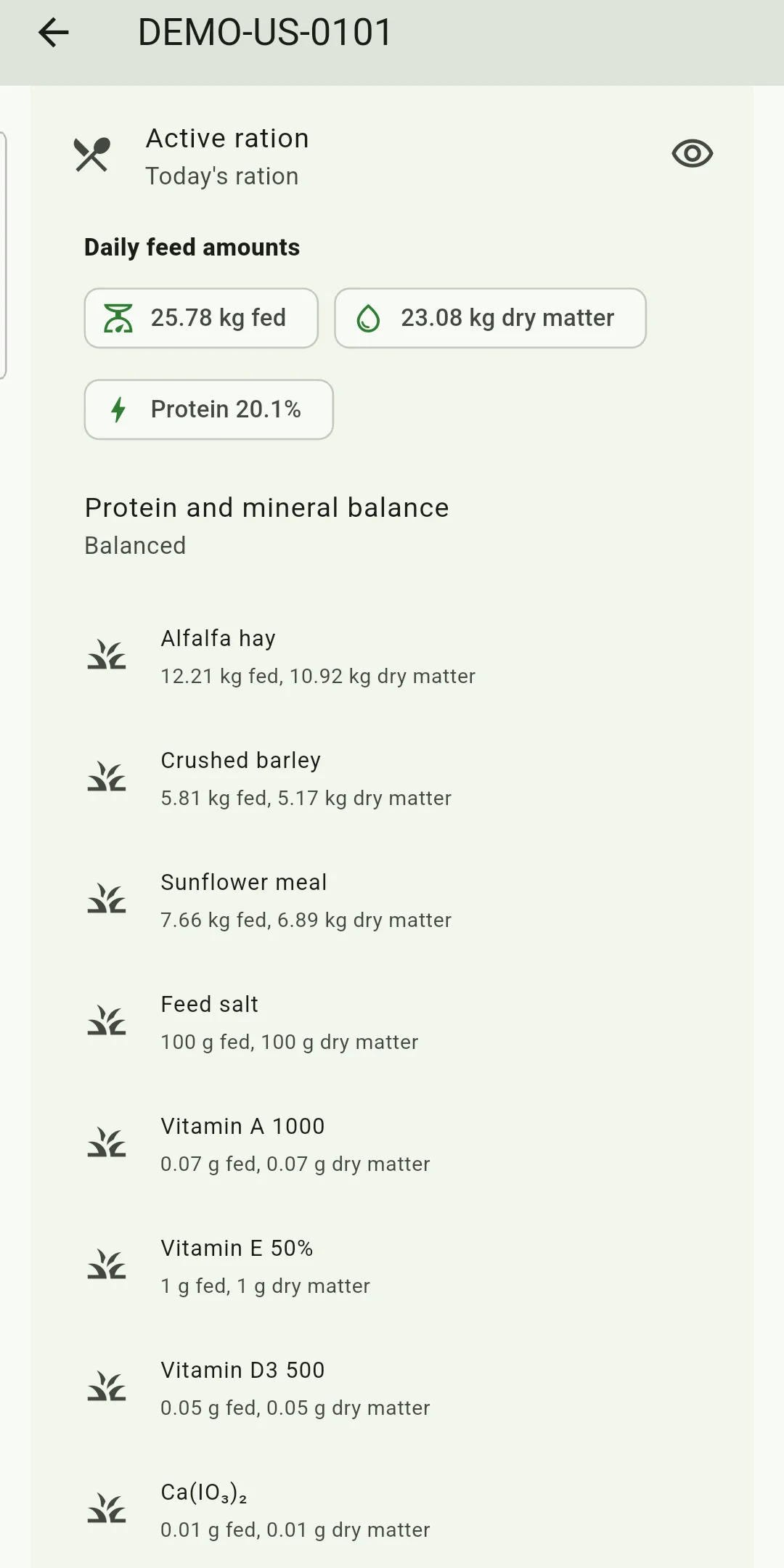
Bring your animals, feed stocks and farm accounts together on your Android phone. HerdMobile keeps your daily work moving offline: record events, compare feed quantities and follow sales and payments in one place. Use your own feeds and herd information to prepare a ration, then keep a backup file under your control.

Sources
Continue reading
- Calf milk feeding: plan for weight and daily gain
- Heifer growth targets: feeding, weight and breeding
- Calving preparation: a clear handover between shifts
- Heat stress in dairy cows: a practical checklist
- Winter feeding starts with forage and water
- Eid finishing: plan the feed change early
- Sheep and copper: read the whole feed label
- Feed library: compare nutrients and dry matter
- Wheat straw: dry matter, protein and fibre
- Seasonal livestock advice for everyday farm jobs
- Why the ration matters on your farm
- Herd records: know each animal’s history
- Farm finance: track sales, payments and feed costs
- How HerdMobile makes farm life easier
- Farm glossary: feed, livestock and money terms explained