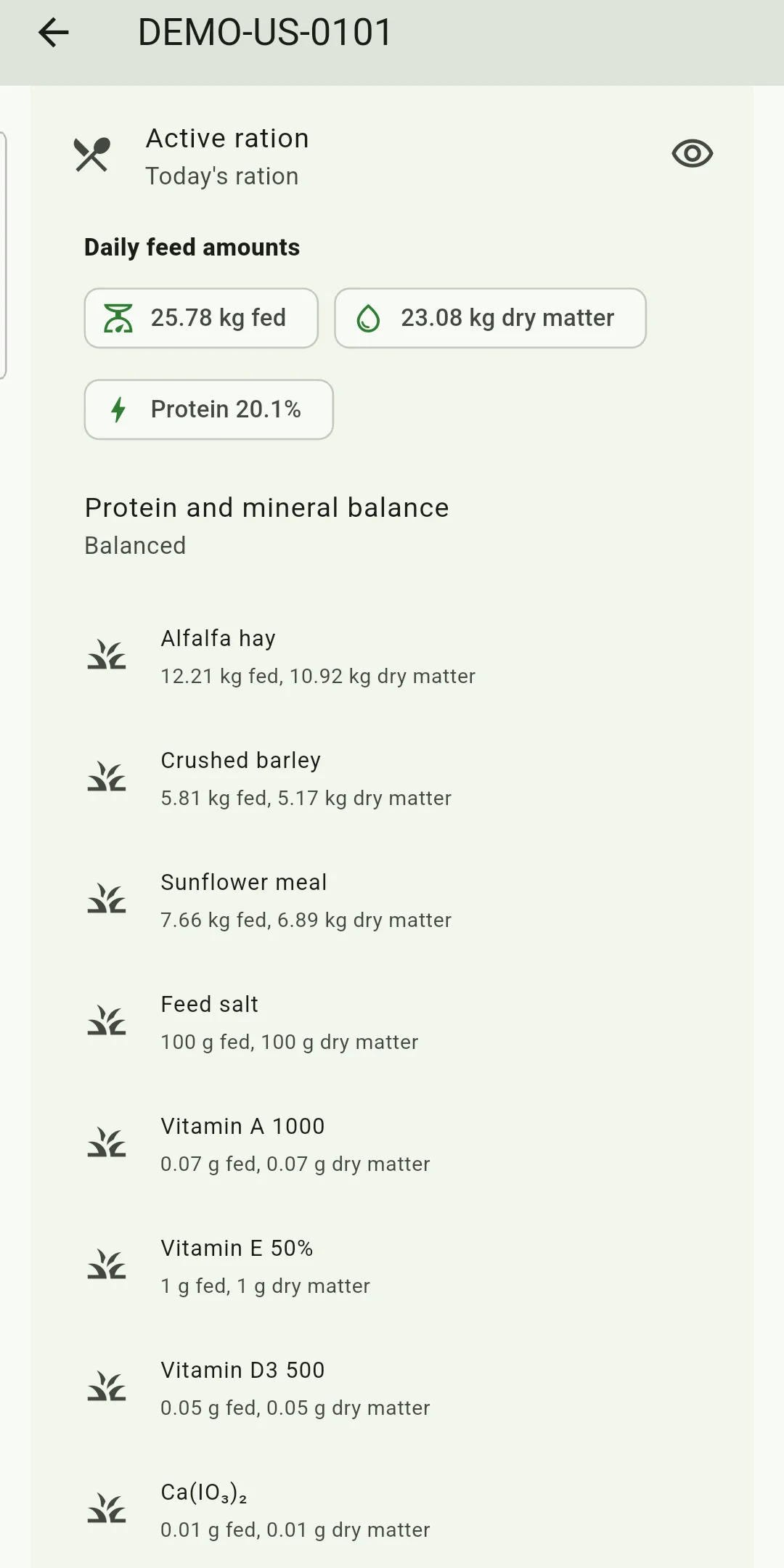
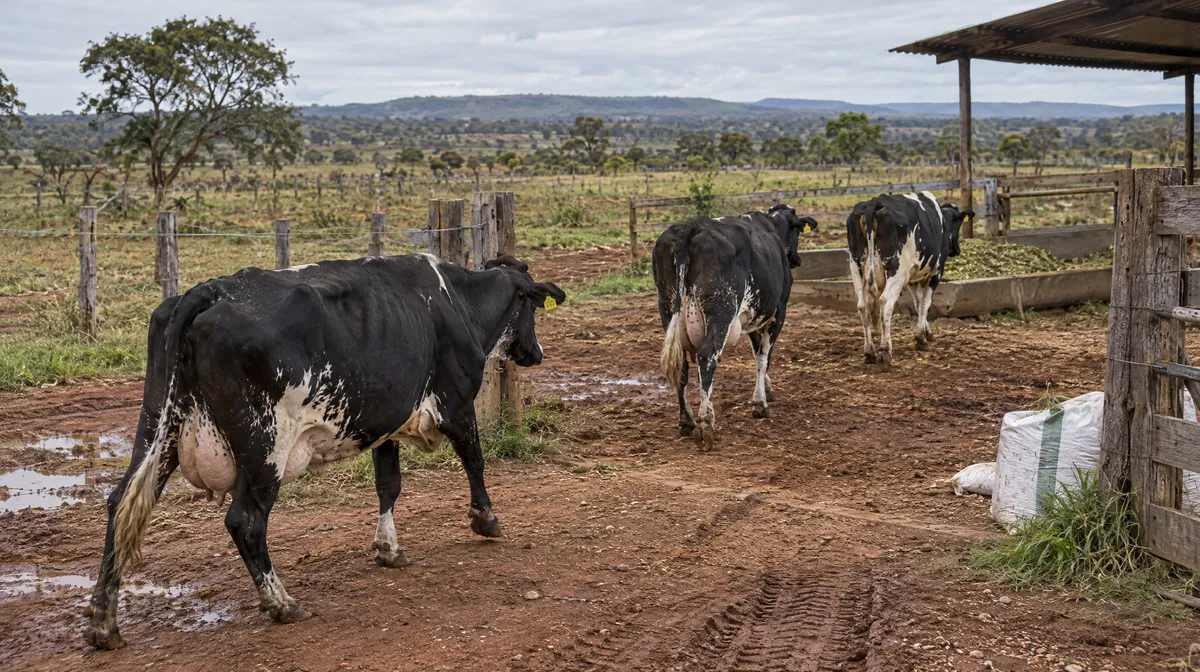
Cattle feeding in Brazil: feed stock and rations
Brazilian cattle feeding shifts between grazing, cut forage and bought supplements as the seasons and farm systems change. Keep maize silage, fresh capim-elefante and soybean meal as separate feeds, with weights and delivery dates. HerdMobile links those stocks to your rations, animal histories and payments on one offline Android phone.
Compiled from open-access scientific sources.
Reference values and basis
| Parameter and basis | Value |
|---|---|
| Maize silage / silagem de milho | kg of silage, as fed |
| Elephant grass / capim-elefante | kg freshly cut grass, as fed |
| Soybean meal / farelo de soja | kg purchased meal, as fed |
How do you track feed as the seasons change?
Start with what your workers actually take to each group of cattle. While cattle are grazing, note any extra forage you give and keep animals at pasture in the right group. When stored maize silage becomes the main forage at the trough, weigh what comes out of the stack and write down the day. Fresh capim-elefante holds far more water than hay or bought meal, so always say whether a figure is fresh weight or dry matter. If you feed from more than one silage stack or cutting, name each batch. That small habit makes it much easier to compare deliveries with your ration plan later. At the end of each week, check what came in, what was fed and what is left. Small, dated entries are worth more than one big guess made at the end of the season.
How should you record bought-in supplements?
Keep soybean meal, mineral supplements and other bought feeds as separate stocks. Note the supplier, delivery date, product name and real kilograms for each load, especially when two deliveries come in different bag sizes. Enter the expense when you pay and link it to the load it paid for, so price changes stay easy to see. An order still on the road is not stock yet; count only the sacks already in the store. If you cut forage on your own land, mark it as home-grown so you can see it clearly beside what you buy. Comparing feed spending with the number of cattle actually fed makes the money side easier to read. A weekly stock count lets workers catch a wrong estimate before the next order goes in. HerdMobile keeps your feed stock and farm accounts in the same app.
Which herd records complete the feeding picture?
Give every animal one ear tag number and record calvings, treatments, vaccinations and sales as they happen. When cattle come off pasture into a housed group, update the group before you check the ration total. A note on a new silage batch or a changed concentrate belongs next to the dates when you recorded milk or body condition. Keep notes short and factual; one sentence on what you saw is enough. When several people share the daily work, agree on the feed names and record each job on the day it is done. In the weekly review, look for animals entered twice, missing dates and feed stocks that fall below zero. HerdMobile works offline on an Android phone, so workers can enter these details in the paddock or shed even where the signal is weak.
Questions from the farm
How do I record fresh capim-elefante?
Write down the kilograms of fresh-cut grass, the date and the group that ate it, and mark it as fresh weight, not dry matter.
Can I keep bought soybean meal and home-grown forage as one stock?
Keep them apart, with their origin noted, so deliveries, feed use and purchase costs are easy to match up.
Can I keep records where there is no mobile signal?
Yes. HerdMobile keeps herd and feed records on your Android phone, offline, and you can save a backup file whenever you like.
How HerdMobile helps
Bring your animals, feed stocks and farm accounts together on your Android phone. HerdMobile keeps your daily work moving offline: record events, compare feed quantities and follow sales and payments in one place. Use your own feeds and herd information to prepare a ration, then keep a backup file under your control.
HerdMobile puts animal records, ration planning, feed stock and farm income and expenses in one app. Brazilian cattle farmers can make daily entries offline on an Android phone and use them in weekly planning.