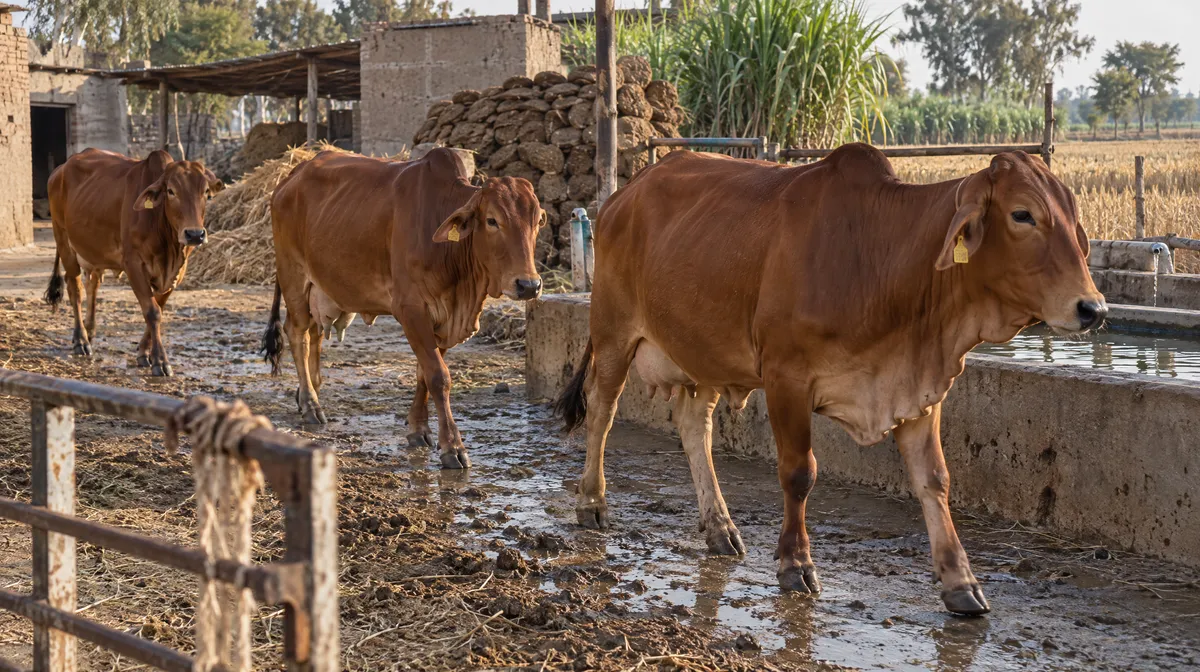
Indian cattle farms: straw, green fodder and oil cake
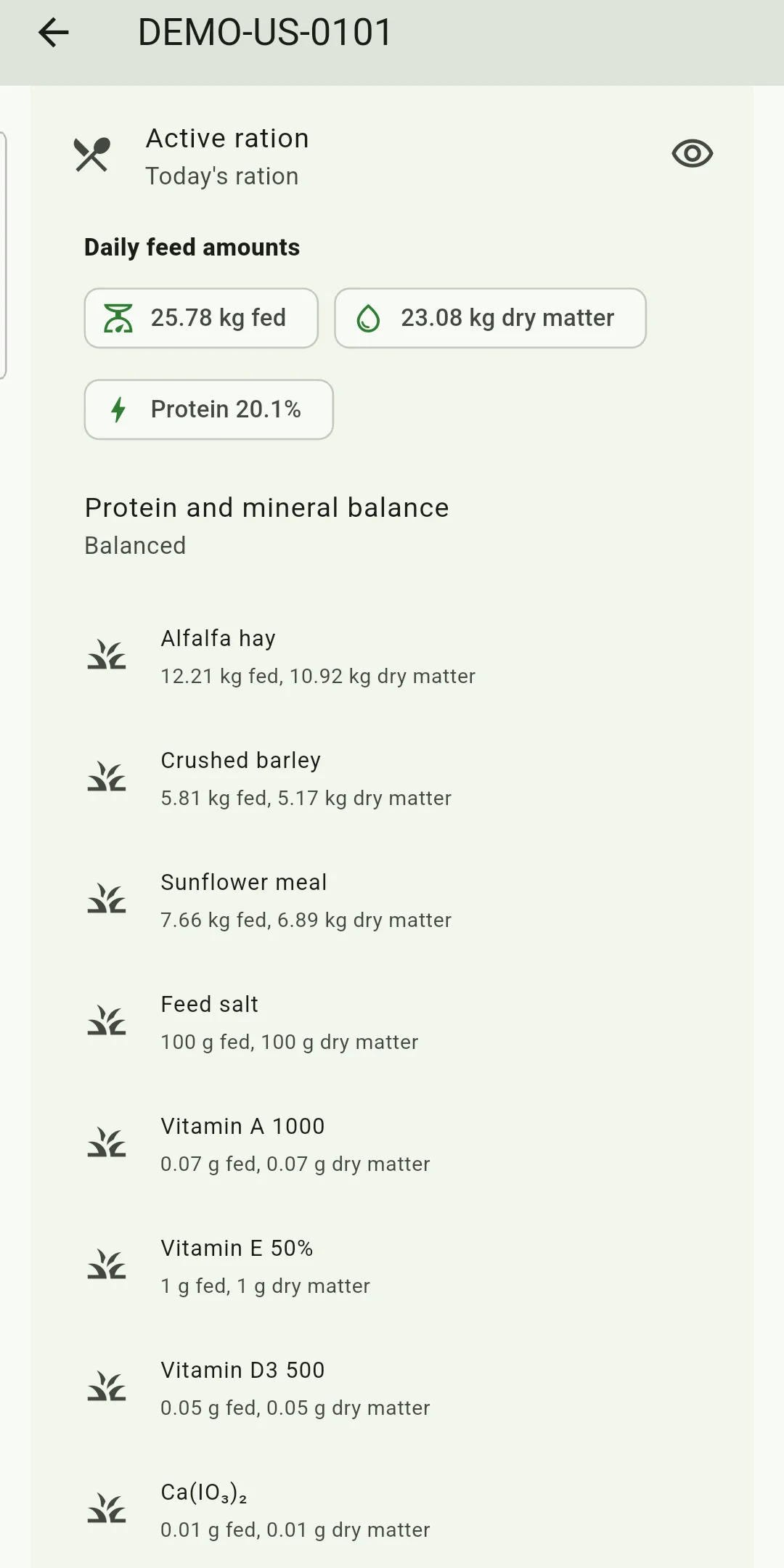
Indian cattle farms often juggle crop residues, seasonal green fodder and bought oilseed cakes. Start with a clean feed list, with kilograms and dates entered the same way every day. HerdMobile keeps ration planning, feed stocks, animal histories and expenses together, so the work carries on even where there is no internet signal.
Compiled from open-access scientific sources.
Reference values and basis
| Parameter and basis | Value |
|---|---|
| Paddy straw — unit and basis | kg straw, as fed |
| Green sorghum fodder — unit and basis | kg fresh crop, as fed |
| Mustard oil cake — unit and basis | kg cake, as purchased |
How do you list crop residues and green fodder?
On a mixed crop and livestock farm, what comes in from the field can change from week to week. Enter paddy straw as its own feed and keep green sorghum or any other cut fodder under a different name. Note harvest or purchase dates and use one clear weight unit. Fresh green fodder is mostly water, so its as-fed kilograms must be converted before you compare them with dry matter figures. If one load is weighed at the chaff cutter and another is estimated by baskets, say so rather than quietly adding the two together. When you start an oil cake or concentrate, enter its correct product name and batch. Clear feed names make it easier to see what you have before trying a new ration for a dairy group.
Which farm costs deserve their own entry?
The price of a bought feed only means something when you can link it to the quantity delivered and the date. Record oil cake, mineral supplements and bought fodder separately from feed grown on the farm. When sacks come in different sizes, add up the kilograms and note the bag count if workers need it. Keep a delivery that has arrived apart from an order that is only promised. Compare the stock used in a week with the number of animals actually fed; a change in the herd often explains feed use that looks odd. Where several people work on the farm, agree on feed names so everyone enters the same product under the same name. Checking the numbers regularly makes your next trip to the feed merchant a planned one.
Which animal records go with your feeding notes?
An ear tag number for each animal is the anchor of a useful herd history. Record births, calvings, vaccinations and treatments under the right animal. If a heifer joins the milking group or a calf moves to another pen, update the group instead of leaving old headcounts in the ration plan. You can then look back and see which group was eating which feed when you noted body condition or milk yield. Keep notes factual and dated; 'ate less feed today' is far more useful than a vague note saying 'problem'. HerdMobile keeps these details on the phone, so you can enter them in a village shed or a distant field. A regular backup protects your growing records when the phone is eventually replaced.
Questions from the farm
Is paddy straw the same as green sorghum in my feed list?
No. Record them separately and mark the quantities as as-fed weights; they differ in water content and in their role in the ration.
What if two suppliers sell the same oil cake in different bag sizes?
Use one feed name every time, write the kilograms received for each batch, and record the price and date separately.
Can I keep animal events and feed expenses on the same phone?
Yes. HerdMobile keeps both herd records and farm accounts on the phone, and it works without a constant connection.
How HerdMobile helps
Bring your animals, feed stocks and farm accounts together on your Android phone. HerdMobile keeps your daily work moving offline: record events, compare feed quantities and follow sales and payments in one place. Use your own feeds and herd information to prepare a ration, then keep a backup file under your control.
HerdMobile gives Indian cattle keepers one offline place for animal histories, feed stocks, ration planning and farm income and expenses. Everyday purchases and feeding work become records you can check later.