Farming in Uzbekistan: feeds, breeds and seasons
Cattle farms in Uzbekistan plan irrigated forage, crop by-products and winter stocks, and count the cost in Uzbek som. HerdMobile puts the mineral and vitamin sources sold there side by side with the hay and grain you weigh at home. Check your breed, calculate the daily ration and follow the cost per head on your phone.
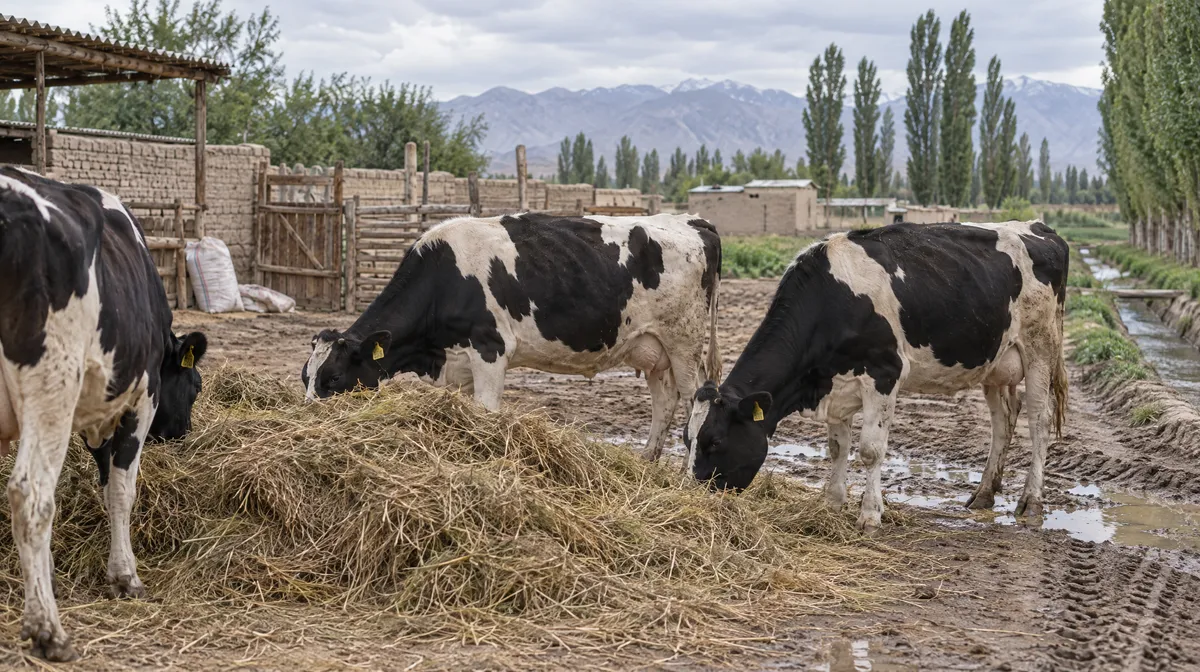
Compiled from open-access scientific sources.
Feeds recorded for this market
| Feed | Job on the farm |
|---|---|
| Copper sulfate pentahydrate (dry-cow premix; UZ) | Mineral or vitamin source for a premix |
| Manganese sulfate monohydrate (dry-cow premix; UZ) | Mineral or vitamin source for a premix |
| Calcium iodate anhydrous (premix preparation) | Mineral or vitamin source for a premix |
| Feed-grade vitamin A 1000 (premix preparation) | Mineral or vitamin source for a premix |
| Feed-grade vitamin D3 500 (premix preparation) | Mineral or vitamin source for a premix |
| Feed-grade vitamin E 50% (premix preparation) | Mineral or vitamin source for a premix |
| Manganese sulfate monohydrate (premix preparation) | Mineral or vitamin source for a premix |
Which feeds does HerdMobile cover in Uzbekistan?
For Uzbekistan, HerdMobile covers the minerals and vitamins farmers use to mix premixes. Two are sold for a dry-cow premix: copper sulfate (pentahydrate) and manganese sulfate (monohydrate). A second manganese sulfate is the general premix ingredient sold in many countries; each has its own units, so you can tell the bags apart. Vitamin A, vitamin E, vitamin D3 and calcium iodate complete the premix list. In Uzbekistan a feed additive needs a registration certificate before it can be produced, sold or imported, so buy copper and manganese from registered suppliers and keep the batch number from the bag. When the invoice arrives, enter the price and the figures you trust for your feed. HerdMobile calculates the daily ration from the feeds you choose and shows the cost per head in Uzbek som. Sheep are very sensitive to copper: a cattle premix is not for the flock, and the sheep-copper article explains why.
Where do home-grown forage and grain fit in?
Household farms and larger holdings feed their cattle on forage they grow, on communal pasture and on crop by-products they buy. Legumes and cereals grown on the farm, cottonseed cake and bought-in crop residues are the everyday feeds that pass through these yards. HerdMobile has values for alfalfa hay, wheat straw and barley, so every new batch has a sound starting point. Weigh a few bales, note the dry-matter figure you trust, and put the purchase price beside the stock on hand. Add cottonseed cake as a feed of its own, with the figures from your invoice. The winter-feeding article turns your stored forage into days of feed. The hot-weather article shows what to watch when a dry summer thins the grazing. Start from the alfalfa, straw and barley pages, then replace any figure with your own analysis.
Which breeds suit these herds?
Choose the breed that matches the animals you keep. Holstein, Brown Swiss and Simmental each come with typical milk-fat and true-protein figures from published research. Angus, Limousin and Charolais are there for beef cattle; if you milk them, your own milk analysis gives you the milk-fat figure. Record any other breed exactly as you call it on the farm, including local cattle and sheep. Add live weight, stage and milk yield, and HerdMobile calculates the ration from your own feeds and premix minerals. The breeds and your herd records are on the same phone, so the group you weigh is the group the ration feeds.
How do the som and the farming year fit into the plan?
HerdMobile keeps the accounts of a farm in Uzbekistan in Uzbek som (UZS). Milk sales, feed purchases and animal prices all stay in som on your phone. In most livestock areas a hot, dry summer is followed by a cold winter, so a winter fodder reserve matters as much as the grazing season. FAO describes the Aral-Caspian lowland as sharply continental and dry, a place where feed put by for the cold months counts for a lot. Note your own dates against that calendar. Spring growth, summer heat and the Kurban finishing period each change how much forage and premix you give. The Eid fattening article keeps weight gain and feed use together for that season. Keep the animals in herd records and the invoices in farm finance, and the ration and the som will add up, from the first bale to the milk payment.
Breed profiles in the library
Questions from the farm
Which premix feeds are covered for Uzbekistan?
HerdMobile covers copper and manganese for a dry-cow premix, the general manganese sulfate, and vitamin A, vitamin E, vitamin D3 and calcium iodate for mixing premixes in Uzbekistan. Each comes with its units, and you can enter the values from your own feed label.
Why are there two kinds of manganese sulfate?
One is sold in Uzbekistan for a dry-cow premix. The other is the general premix ingredient sold in many countries. Each has its own units and values, so choose the one that matches the bag in your store.
Which breed should I choose?
Choose the breed that matches the animals you keep. Holstein, Brown Swiss and Simmental come with typical milk figures from published research. Angus, Limousin and Charolais cover beef cattle. Record any other breed under the name you use.
How do I follow feed cost through the year?
Record feed purchases and milk sales in Uzbek som. Recalculate the ration whenever the forage batch or the season changes, and compare the cost per head with the invoices in farm finance.
How HerdMobile helps
Keep animals, feed stocks and farm money together on your Android phone. HerdMobile calculates the daily ration from the feeds you select, shows the kilos and the cost per animal, and stays with you when the connection is thin. Save a backup file whenever you want a copy in your own hands.

Sources
- CIAT — livestock feed and fodder development in Uzbekistan (FAO AGRIS, 2023)
- FAO TECA — winter fodder reserves in the Aral-Caspian depression
- Uzbekistan — registration of feed additives (Lex.uz)
- NASEM 2021 — Nutrient Requirements of Dairy Cattle
- Feedipedia — animal feed resources
- CDCB — DHI milk-component averages
- Fleckvieh milk composition, Bosch et al. (2025)
- HerdMobile — feed markets and currencies