Silage inoculants: faster fermentation, less heating
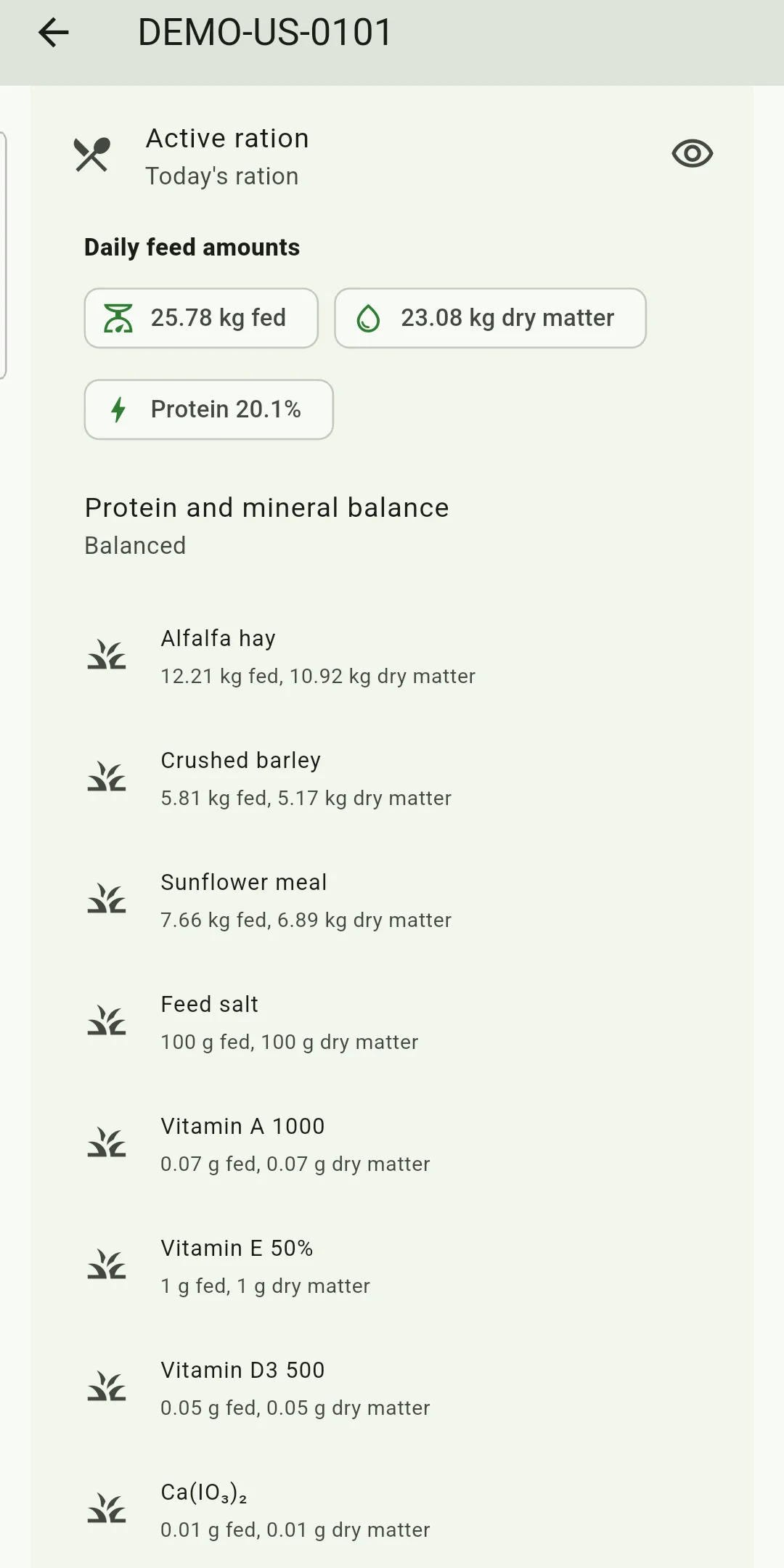
A silage inoculant that supplies at least 100,000 colony-forming units of lactic acid bacteria per gram of fresh crop speeds up fermentation and keeps the face from heating. Homofermentative strains take pit pH below 4.0 within 72 hours, while Lactobacillus buchneri keeps the opened face stable. Record silage stock and your own dry matter analysis in HerdMobile.
Compiled from open-access scientific sources.
How do homofermentative and heterofermentative bacteria differ?
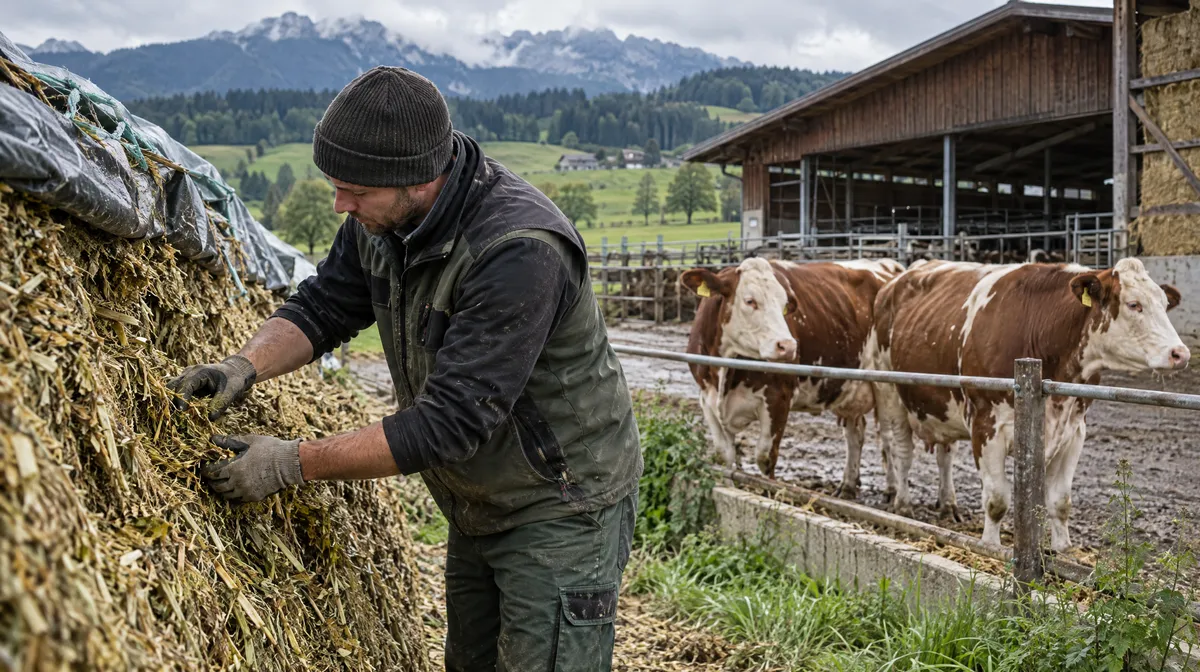
Homofermentative bacteria such as Lactobacillus plantarum and Enterococcus faecium turn the plant’s sugars into lactic acid alone. That takes maize silage below pH 4.0 and legume haylage below pH 4.5 within 72 hours. A fast drop in pH stops protein breakdown, keeps out the clostridia that make butyric acid, and saves energy your cattle can digest. Heterofermentative strains such as Lactobacillus buchneri turn part of the lactic acid into acetic acid, which holds back the yeasts and moulds that spoil silage once air reaches the face at feed-out. Trials show that using both types together can keep up to 96 percent of the dry matter you harvested.
What rate and harvest dry matter give the best fermentation?
Spray liquid inoculant through a calibrated applicator at the forage harvester’s feed rolls, so every gram of fresh forage gets 100,000 to 300,000 colony-forming units. Cut whole-plant maize for silage at 32 to 36 percent dry matter, when the starch has built up in the grain and the kernels process well, and wilt lucerne (alfalfa) or clover to 35 to 45 percent dry matter before chopping. When the bacteria are spread evenly through the crop, fermentation starts as soon as the pit is packed, with no delay, and less of the soluble protein is lost.
How does HerdMobile help you manage silage stock?
With HerdMobile you add silage to your feed stock and record what goes out each day; the app shows how much is left and warns you when stock runs low. When forage lab results come back, enter your own analysis, such as crude protein, NDF and starch, in the feed library. HerdMobile then works out the daily ration for dairy and beef cattle from your own silage and other feeds, with the cost per head per day, so rations stay right as the silage changes through the winter. It all works without an internet connection.
Questions from the farm
How many bacteria per gram should a silage inoculant supply?
A good silage inoculant supplies at least 100,000 colony-forming units of lactic acid bacteria per gram of fresh chopped forage.
What silage pH range shows a good fermentation?
Well-fermented maize silage settles below pH 4.0, while grass and legume haylage settles between pH 4.2 and 4.5.
How does HerdMobile help you keep track of silage stock?
HerdMobile keeps your silage stock, your own dry matter analysis and daily feed use on your phone, and warns you when stock runs low.
How HerdMobile helps
Bring your animals, feed stocks and farm accounts together on your Android phone. HerdMobile keeps your daily work moving offline: record events, compare feed quantities and follow sales and payments in one place. Use your own feeds and herd information to prepare a ration, then keep a backup file under your control.