Milk sales and payments: track every delivery
Milk sales and payments are easier to track when you note each delivery's date, buyer, litres and agreed price. The total is worked out for you, and a due date reminds you about unpaid milk. At month end, compare litres sold with litres milked and see how much each buyer still owes.
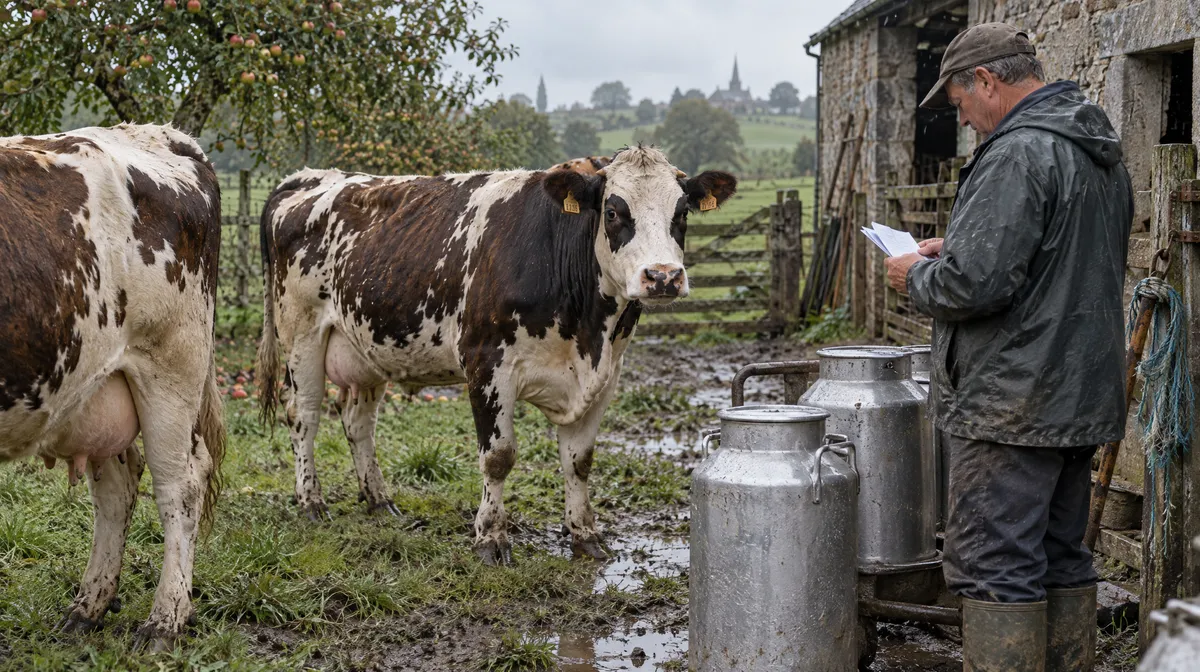
Compiled from open-access scientific sources.
Reference values and basis
| Parameter and basis | Value |
|---|---|
| Date and buyer | Delivery date and buyer: dairy, collector or neighbour |
| Litres | Amount on the delivery slip |
| Unit price | Agreed price per litre for that delivery |
| Total | Litres multiplied by unit price |
| Payment status | Paid, partly paid (amount received) or still owed |
| Due date | A reminder when payment is due |
What should you note for each milk delivery?
Note the delivery date, buyer, litres and agreed price per litre. Multiply litres by price to get the amount owed, then check it against the delivery slip and the payment when it arrives. Note whether you were paid in full, received part of the money or are still waiting for payment by an agreed date. Keep a photo of any slip or statement with the delivery details. Taking a few seconds while the milk is collected saves you searching through paperwork at month end.
How do you handle price changes and bonuses?
Use the price agreed for each delivery, because dairies change prices over time and may pay more or less for milk quality. An average price can hide those differences. When a quality bonus or deduction arrives at month end, note it separately as income or an expense and say what it was for. You can then see the milk payment before adjustments and how much each bonus or deduction changed it, ready for your next price discussion.
Multiple buyers
Note the buyer for each delivery. Check each dairy or customer separately for litres sold, total value and money still owed.
Milk used at home or fed to calves
Note the milk fed to calves and used at home as part of production, but leave it out of sales. That explains the difference between litres milked and litres sold.
How do you compare litres milked with litres sold?
Compare the month's total milk production with the litres delivered. Calf feeding and household use explain small differences. If the gap is large, check for a delivery you missed, milk that was spilled or a slip you forgot to note. Keeping production and sales together makes the comparison quick and helps you get an accurate figure for the month's milk income.
What do you check at month end?
Check four figures at month end: litres sold, total sales value, money received and money still owed. Match the money received to your bank account and cash payments. Mark fully paid deliveries as settled and keep track of when the remaining payments are due. Use the same four figures for your monthly cash plan, starting with a clear picture of what milk has earned and what you can spend.
Questions from the farm
Should I note every milk delivery or a monthly total?
Note every milk delivery. Matching each one to its slip makes the month-end check quick.
How do I record a partial payment?
For a partial payment, note how much you received. You can still see the balance the buyer owes.
Where do quality bonuses go?
Note each quality bonus separately as income and say what it was for, keeping the base milk payment clear.
Can I keep a photo of the slip?
Yes. Keep a photo of the slip with the milk sale.
How HerdMobile helps
Bring your animals, feed stocks and farm accounts together on your Android phone. HerdMobile keeps your daily work moving offline: record events, compare feed quantities and follow sales and payments in one place. Use your own feeds and herd information to prepare a ration, then keep a backup file under your control.
HerdMobile helps you see how much milk you sold, who bought it and what you earned. Track full and partial payments, see what is still owed and set a due date for a payment reminder. Paid sales also appear in your farm income, and you can keep the delivery document with the sale.

Sources
Continue reading
- Unpaid farm sales: keep track of who owes you
- Culling decisions: five checks before a cow leaves
- Feed cost per head: start from weighed amounts
- Farm record keeping: a routine you can keep up
- Farm finance: track sales, payments and feed costs
- Breed profiles: milk fat and protein by breed
- Feed library: compare nutrients and dry matter